Did Guillermo Del Toro Actually Ruin The Hobbit? The Truth
Did Guillermo del Toro Actually Ruin The Hobbit? The Truth
The narrative surrounding the production of The Hobbit often centers on the perceived failure of the trilogy’s pacing and narrative expansion. To suggest that Guillermo del Toro “ruined” the project is a historical fallacy, as he departed the director’s chair before a single frame of principal photography was captured. His involvement was a period of conceptualization rather than execution.
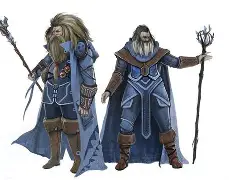
Del Toro was officially appointed in April 2008, bringing a distinct aesthetic rooted in dark fantasy and gothicism. His objective was to create a visual bridge between the whimsical nature of the original novel and the epic scale of the Third Age. He sought to infuse the world with a poetic beauty, often blending the grotesque with the sublime.
This vision involved a specific tonal shift, beginning with a lighter, fairy-tale atmosphere that would gradually evolve to match the established visual language of Peter Jackson’s The Lord of the Rings. This progression was intended to mirror the journey of the protagonists as they moved from the comfort of the Shire toward the perils of the Lonely Mountain.
Guillermo del Toro on “Frankenstein” and remaking a monster
Guillermo del Toro on Making Frankenstein, Wanting to Buy a Haunted House & His Dad’s Lottery Win
How Jacob Elordi Became The Creature in Guillermo Del Toro’s Frankenstein
“Guillermo del Toro’s PINOCCHIO (2026)is a Masterpiece! Full Story + Ending Explained”
The Divergence of Vision and Execution
The Fairy-Tale Approach vs. The Epic Expansion
In the original Legendarium, The Hobbit serves as a concise precursor to the more complex geopolitical conflicts of the War of the Ring. Del Toro intended to preserve this lighter tone, contrasting it with the later, more somber entries in the cinematic universe.
This approach would have likely avoided the narrative bloat seen in the final trilogy. By focusing on the fairy-tale essence, the transition toward the darker themes of the later films would have felt organic rather than forced through added subplots.
The Logistics of a Production Collapse
Script Contradictions and Institutional Inertia
The primary catalyst for del Toro’s exit in May 2010 was a combination of script instability and corporate hesitation. He noted that the writing process was iterative to a fault, with weekly discoveries frequently contradicting previous drafts, which hindered casting and production planning.
Furthermore, the lack of a green light from New Line Cinema and MGM created a vacuum of authority. Without a finalized budget or cast in place by late 2009, the production timeline shifted from a 2010 start to a projected 2011 date.
Del Toro realized that a three-year commitment was likely to double to six years. Given his other creative pursuits and the instability of the project, he chose to withdraw from the director’s role to avoid a prolonged professional stalemate.
The Burden of the Reluctant Director
Peter Jackson’s Transition
Peter Jackson’s subsequent return to the director’s chair was not a planned transition but a necessity born of crisis. Jackson himself admitted to feeling “clueless” regarding the direction of the project immediately following del Toro’s departure.
The pressure to adhere to a rigid schedule, despite the lack of a cohesive script, led to the decision to expand the story into three films. This narrative expansion is often cited by scholars as the primary cause of the trilogy’s pacing issues and deviation from the source text.
While del Toro’s practical special effects and anatomical precision—evident in his work on Frankenstein—would have brought a unique texture to Middle-earth, his absence left a void that was filled by an over-reliance on digital imagery.
Book vs. Film: The Legendarium Perspective
The literary source material is a focused journey of a halfling reclaiming a mountain. The films, however, transformed this into a sprawling epic that often felt like a prequel to the War of the Ring rather than a standalone adventure.
Del Toro’s proposed “slow progression” in style would have mirrored the growth of Bilbo Baggins himself. Instead, the films maintained a consistent, high-intensity scale that stripped the story of its intimate, whimsical roots, favoring spectacle over the quietude of the original text.
FAQ
Did Guillermo del Toro direct any part of The Hobbit?
No, Guillermo del Toro did not direct any scenes. He was involved in the pre-production and co-writing phases from 2008 until his departure in May 2010.
Why did del Toro leave the project?
He left due to script contradictions, the lack of a finalized budget and cast, and the realization that the production timeline would extend far beyond his original three-year commitment.
How would del Toro’s version have differed from Peter Jackson’s?
Del Toro envisioned a lighter, fairy-tale tone for the first film that would gradually transition into the more epic and darker style established in The Lord of the Rings.