Did Guillermo Del Toro Actually Ruin The Hobbit? The Truth
Did Guillermo del Toro Actually Ruin The Hobbit? The Truth
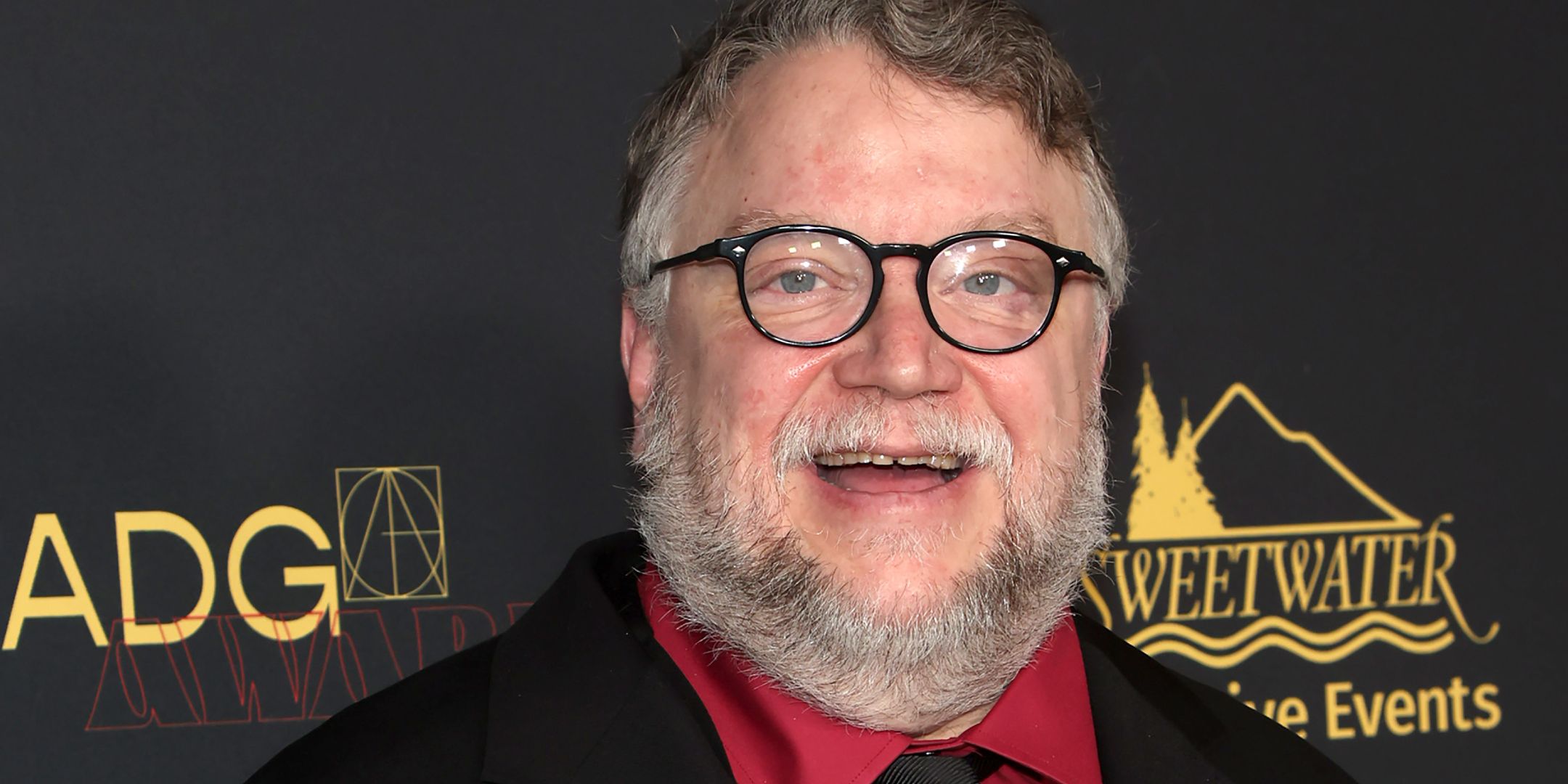
Guillermo del Toro’s departure from The Hobbit did not destroy the adaptation. The production was already suffering from studio instability, unresolved financing, delayed scripts, and an increasingly impossible timeline before the Mexican filmmaker officially exited the project in May 2010. By the time Peter Jackson returned to the director’s chair, the adaptation pipeline had already become structurally compromised.
The accusation that del Toro “ruined” The Hobbit persists largely because audiences associate the trilogy’s tonal inconsistency with the chaotic transition between directors. Yet del Toro never directed principal photography, never supervised post-production, and never finalized the shooting structure that eventually reached cinemas between 2012 and 2014.
What makes the debate fascinating from a Tolkienian perspective is that del Toro’s intended artistic approach may actually have aligned more closely with the tonal structure of Tolkien’s original 1937 novel than the final trilogy ultimately did. His stated vision involved a fairy-tale atmosphere gradually evolving into the darker historical gravity associated with the waning years of the Third Age.
Guillermo del Toro on “Frankenstein” and remaking a monster
Guillermo del Toro on Making Frankenstein, Wanting to Buy a Haunted House & His Dad’s Lottery Win
How Jacob Elordi Became The Creature in Guillermo Del Toro’s Frankenstein
“Guillermo del Toro’s PINOCCHIO (2026)is a Masterpiece! Full Story + Ending Explained”
The Production Crisis Behind The Hobbit
After the monumental success of Peter Jackson’s The Lord of the Rings trilogy, New Line Cinema and MGM rapidly pursued an adaptation of The Hobbit. However, rights disputes and corporate instability immediately slowed progress. Jackson initially intended only to produce and co-write the films rather than direct them.
Guillermo del Toro officially joined the project in April 2008. He relocated to New Zealand and spent years immersed in conceptual development. During this period, extensive work was completed involving creature design, environmental studies, costumes, weapons, prosthetics, and narrative restructuring.
At that stage, the adaptation was planned as two films rather than a trilogy. Del Toro collaborated closely with Peter Jackson, Fran Walsh, and Philippa Boyens on screenplay development. Yet the scripts remained fluid, with major structural changes occurring repeatedly throughout pre-production.
Pre-production instability became one of the defining characteristics of the entire project. Del Toro himself explained that weekly discoveries during the writing process constantly contradicted earlier ideas. As a result, casting, budgeting, and scheduling became increasingly difficult to finalize.
Why Guillermo del Toro Left The Hobbit
MGM’s Financial Collapse
The primary reason for del Toro’s departure was industrial rather than artistic. MGM entered severe financial difficulties during development, creating prolonged uncertainty regarding production approval and financing. The films repeatedly failed to receive a definitive green light.
Originally, del Toro expected a commitment of approximately three years. Instead, the production delays threatened to extend his involvement toward six years or longer. For a filmmaker with numerous parallel creative projects, the situation became professionally unsustainable.
This distinction is historically essential. Del Toro did not abandon a functioning film production. He exited a project trapped inside a corporate and logistical deadlock.
The Burden Passed To Peter Jackson
When del Toro departed in 2010, Peter Jackson reluctantly stepped in as director. However, Jackson inherited a production already operating under extreme pressure. Unlike The Lord of the Rings, which benefited from years of carefully coordinated preparation, The Hobbit entered filming with a compressed schedule.
Jackson later admitted that he often felt uncertain during production because the transition happened so rapidly. The trilogy therefore developed a reactive creative methodology rather than the long-term structural precision associated with the earlier Middle-earth films.
Compressed production timelines heavily influenced the final cinematic result. Large portions of the trilogy display symptoms of rushed planning, especially in action choreography, visual effects integration, and tonal consistency.
Del Toro’s Vision For Middle-earth
A Fairy-Story Interpretation
One of the most misunderstood aspects of del Toro’s planned adaptation concerns tone. He intended the first film to embrace a lighter fairy-tale atmosphere before gradually transitioning toward the darker epic style associated with Jackson’s established Middle-earth.
This approach actually mirrors Tolkien’s literary structure. The Hobbit begins with a whimsical and almost oral-storytelling cadence before slowly intersecting with the deeper mythology of Arda. Bilbo’s journey evolves from fireside adventure into historical catastrophe.
Tolkien’s legendarium was never tonally uniform. Del Toro appeared to recognize that the novel occupies an intermediate space between children’s fairy tale and epic mythology.
Grotesque Beauty and Creature Design
Del Toro’s cinema is famous for combining horror, beauty, and mythology through highly textured creature design. Films such as Pan’s Labyrinth, Hellboy, and The Shape of Water reveal his fascination with monsters as emotionally symbolic beings rather than simple antagonists.
The video interviews surrounding his modern adaptation of Frankenstein demonstrate this philosophy clearly. Del Toro speaks obsessively about anatomy, stitching, physical texture, and emotional humanity within monstrous forms. That same artistic instinct would likely have influenced goblins, spiders, wargs, trolls, and even Smaug himself.
Practical prosthetics and tactile creature aesthetics probably would have played a much larger role under del Toro’s direction. His filmmaking consistently emphasizes physical texture and handcrafted visual detail rather than total digital abstraction.
Would Del Toro’s Hobbit Have Been Better?
The answer depends entirely on what viewers expected from a Tolkien adaptation. Audiences seeking direct stylistic continuity with Jackson’s earlier trilogy might have found del Toro’s interpretation visually alien. His gothic romanticism, baroque symbolism, and fascination with grotesque beauty differ significantly from Jackson’s grounded pseudo-medieval realism.
However, readers focused on Tolkien’s original text may have appreciated the tonal divergence. The novel itself possesses an eccentricity often absent from the final trilogy. Talking trolls, argumentative purses, playful narration, and folkloric absurdity dominate large portions of the book.
Adaptational fidelity therefore becomes a complicated issue. Jackson’s films maintained continuity with his own cinematic universe, while del Toro seemed more interested in reflecting the literary transformation occurring inside Tolkien’s text itself.
The Problems Of Jackson’s Final Trilogy
The Expansion Into Three Films
One of the most controversial production decisions occurred after del Toro’s departure: the expansion from two films into a trilogy. This restructuring dramatically altered pacing and narrative density.
Material from Tolkien’s appendices became heavily integrated into Bilbo’s relatively intimate narrative. As a result, the films oscillate between personal adventure and geopolitical war chronicle.
The shift created significant tonal imbalance. Bilbo’s psychological arc occasionally becomes overshadowed by large-scale spectacle involving the White Council, Dol Guldur, and the rise of Sauron.
Digital Excess
The original Lord of the Rings trilogy relied heavily on miniatures, location shooting, forced perspective, and physical sets. By contrast, The Hobbit frequently embraced aggressive digital cinematography and CGI-heavy environments.
Digital overproduction became one of the trilogy’s defining criticisms. Action scenes often abandoned realistic physical weight in favor of exaggerated kinetic spectacle. The barrel escape sequence and portions of the Battle of the Five Armies became particularly divisive among Tolkien enthusiasts.
Ironically, many of these issues intensified after del Toro left. Yet his name remained attached as co-writer and producer, causing some viewers to incorrectly associate him with decisions made during Jackson’s emergency reconstruction of the project.
The Frankenstein Connection: Understanding Del Toro’s Artistic Philosophy
The modern interviews promoting del Toro’s Frankenstein adaptation reveal important insight into how he approaches mythology and monstrosity. He consistently describes monsters as emotional, tragic, and profoundly human figures rather than mere horror devices.
That philosophy aligns surprisingly well with Tolkien’s corrupted beings. Orcs, dragons, Ringwraiths, and fallen Maiar are not simply evil entities. They represent distortion, decay, and spiritual corruption within the metaphysical order of Arda.
Mythic symbolism lies at the core of both Tolkien’s and del Toro’s artistic sensibilities. The difference emerges primarily in visual expression. Tolkien often communicates tragedy linguistically and historically, while del Toro externalizes it through physical and anatomical imagery.
Did Guillermo del Toro Actually Ruin The Hobbit?
No historical evidence supports that conclusion. The production difficulties surrounding The Hobbit existed before his departure and intensified afterward due to compressed timelines and escalating studio demands.
Del Toro may have delivered a radically different adaptation. It likely would have been stranger, more tactile, more folkloric, and visually darker in a gothic sense. Whether audiences would have embraced that interpretation remains impossible to determine.
What can be stated with confidence is that the final trilogy primarily reflects Peter Jackson’s attempt to salvage an increasingly unstable production under severe industrial pressure.
Middle-earth adaptation history demonstrates that the true problem was not Guillermo del Toro’s imagination, but the collision between corporate urgency, franchise expectation, and the enormous complexity of translating Tolkien’s evolving literary modes into cinema.
FAQ
Why did Guillermo del Toro leave The Hobbit?
He left because prolonged studio delays and MGM’s financial instability dramatically extended the project timeline beyond what he originally agreed to commit.
Did Guillermo del Toro direct any scenes in The Hobbit trilogy?
No. He participated in writing and conceptual pre-production but departed before principal photography began.
Was del Toro’s version closer to Tolkien’s original novel?
Potentially. His intended fairy-tale progression aligns closely with the tonal evolution found in Tolkien’s 1937 text.
Why are The Hobbit films more controversial than The Lord of the Rings trilogy?
The films suffered from compressed production schedules, tonal imbalance, narrative expansion into three movies, and heavy reliance on digital effects.
Would Guillermo del Toro’s Hobbit have looked different?
Yes. His visual style emphasizes gothic fantasy, tactile creature design, symbolic monstrosity, and fairy-tale atmosphere rather than strict continuity with Jackson’s earlier cinematic realism.