Why The Ring Didnt Corrupt Bilbo As Fast As It Did Smeagol
Why the Ring didn’t corrupt Bilbo as fast as it did Smeagol: A Deep Dive into Middle-earth Lore and Film Production History
Introduction
In J.R.R. Tolkien’s epic masterpiece, The Lord of the Rings, we find two beings bound by a common thread: the One Ring. While both Bilbo Baggins and Smeagol (later known as Gollum) were affected by this cursed artifact, they experienced its influence differently. In this article, we delve into the unique circumstances surrounding each ringbearer’s journey and explore why the Ring corrupted Smeagol far more swiftly than it did Bilbo.
The Ring’s Impact on Its Bearers
The One Ring has a profound effect on its mortal bearers, bestowing invisibility while also sapping their vitality and will. With Bilbo, we see this manifestation in his transformation from a carefree hobbit to one stretched thin by the Ring’s power. Smeagol, however, was subjected to an extreme version of this effect due to his extended possession of the Ring.
The Manner of Possession: A Crucial Differentiator
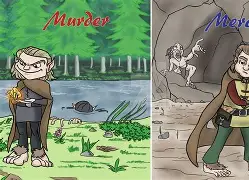
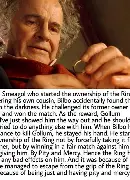
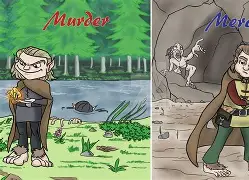
One crucial factor that sets apart Bilbo and Smeagol’s experiences with the Ring is the manner in which they came into its possession. Bilbo, moved by pity, spared Smeagol’s life, and thus, according to Gandalf, was able to give up the Ring voluntarily. In contrast, Smeagol took the Ring forcibly, ultimately losing it rather than giving it up willingly.
The Power of Redemption: Bilbo vs. Gollum
The distinction between Bilbo and Smeagol lies not only in the manner of their possession but also in their capacity for redemption. Bilbo, despite his moments of weakness, ultimately chooses to return the Ring to its rightful place. In contrast, Gollum is consumed by the Ring’s power, becoming a shadow of his former self – Smeagol.
A Note on Isildur and Elrond
As we delve into the lore of Middle-earth, it is worth mentioning another instance where a mortal had the opportunity to destroy the One Ring but ultimately failed: Isildur. While the events surrounding Isildur’s encounter with Elrond and the Ring differ in the books and films, both versions underscore the potency of the Ring’s allure and the human capacity for redemption – or lack thereof.
Conclusion
The journey of Bilbo Baggins and Smeagol serves as a stark reminder of the perils of the One Ring and the consequences of succumbing to its temptations. While both characters were touched by its power, their unique circumstances resulted in vastly different outcomes. As we continue to explore Middle-earth and the incredible world of J.R.R. Tolkien, let us remember that even the smallest actions can have far-reaching consequences.
Further Reading
– [The Lord of the Rings: A Reader’s Guide](https://www.amazon.com/Lord-Rings-Readers-Guide-Tolkien/dp/0571293186)
– [The Silmarillion](https://www.amazon.com/Silmarillion-J-R-R-Tolkien/dp/0007333954)
– [Unfinished Tales of Númenor and Middle-earth](https://www.amazon.com/Unfinished-Tales-N%C3%BAmenor-Middle-Earth-Collector/dp/1860247569)

Acknowledgments
This article is dedicated to J.R.R. Tolkien and his timeless creation, Middle-earth. Special thanks to the countless scholars, filmmakers, and fans who have contributed to our understanding of this extraordinary world.