Rare Tolkien Imagery: A Deep Dive Into The Second Age Of Middle-Earth
Rare Tolkien Imagery: A Deep Dive into the Second Age of Middle-earth
The Second Age of Middle-earth represents a pivotal transition from the cosmic wars of the First Age to the fragmented political landscapes of the Third. It is defined by the forging of the Rings of Power and the catastrophic collapse of the Atlanterian-inspired kingdom of Númenor. This era bridges the gap between the defeat of Morgoth and the eventual War of the Ring.
Unlike the First Age, which is extensively detailed in The Silmarillion, the Second Age exists primarily in fragmented notes and appendices. Christopher Tolkien’s curation of the 12-volume History of Middle-earth reveals a complex web of contradictory drafts and evolving chronologies. This textual instability creates a significant challenge for historians attempting to establish a definitive timeline.
The primary narrative anchors for this period are found within the Appendices of The Lord of the Rings and Unfinished Tales. These texts outline the rise of the sea-kings of Westernesse and the strategic maneuvers of the Last Alliance of Elves and Men. The imagery shifts from the high-fantasy mythology of the Elder Days to a more grounded, geopolitical tragedy.
How Sauron Deceived Middle-earth | The Second Age Explained
Middle-Earth: Complete History of the 2nd Age
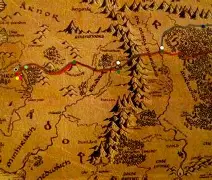
Maps of Middle-earth: The Second Age | Tolkien Explained
The Rise of Sauron in the Second Age | Lord of the Rings Lore Explained
The Metamorphosis of Mairon and the Art of Deception
Sauron’s entry into the Second Age is characterized not by conquest, but by the status of a refugee. Following the fall of Morgoth, he avoided judgment in Valinor by adopting a fair form to deceive the inhabitants of Middle-earth. He presented himself as a benevolent guide, promising to organize the wilderness into a structured civilization.
This version of the antagonist differs fundamentally from the monolithic “Eye” imagery prevalent in the Peter Jackson films. In the Legendarium, the horror of the Second Age lies in the psychological manipulation of the Edain and the Elves. Sauron’s power was rooted in his ability to appear as a savior while secretly forging the instruments of dominion.
The forging of the Rings of Power was the culmination of this deception. By infiltrating the workshops of the Gwaith-i-Mírdain, Sauron ensured that the rings would serve as anchors for his will. This technical achievement allowed him to exert influence over the leaders of Middle-earth without the need for immediate military aggression.
The Geopolitical Rise and Fall of Númenor
The island of Númenor served as a sanctuary for the Edain, granted by the Valar as a reward for their loyalty during the First Age. This kingdom reached a zenith of architectural and naval power, creating a civilization that far surpassed any other in Middle-earth. However, this prosperity bred a fatal resentment toward the Ban of the Valar.
The spiritual decay of the Númenóreans was marked by a refusal to accept mortality. This obsession led them to seek the Undying Lands, eventually falling under the influence of Sauron, who acted as a counselor to the king. The resulting rebellion triggered a divine intervention that physically reshaped the world.
The cataclysm of Númenor is one of the most significant events in the Legendarium’s physical geography. The world was changed from a flat plane to a sphere, and the island was swallowed by the sea. Only the Faithful, led by Elendil, escaped to Middle-earth to establish the realms of Arnor and Gondor.
Textual Architecture vs. Cinematic Adaptation
A critical distinction exists between the literary canon and modern screen adaptations. Current legal constraints limit certain productions to the Appendices of The Lord of the Rings, excluding the broader context provided by The Silmarillion and Unfinished Tales. This creates a narrative gap where showrunners must use creative license to fill in the history of the Second Age.
In the books, the Second Age is a slow burn of political erosion and spiritual failure. Cinematic versions often prioritize the spectacle of the Rings and the immediate threat of the Dark Lord. The literary focus, however, remains on the long-term corruption of the human spirit and the tragedy of lost knowledge.
The Last Alliance of Elves and Men serves as the final act of the age, providing a rare moment of unity between the races. While films depict this as a grand battle, the texts emphasize the cost of victory and the failure of Isildur to destroy the One Ring. This single act of greed ensured that the shadow of the Second Age would persist into the Third.
The Role of the History of Middle-earth Series
To truly understand the Second Age, one must look beyond the published novels to the 12-volume History of Middle-earth. These volumes document the evolution of the mythos, showing how Tolkien revised the dates of the forging of the rings and the timeline of the Númenórean downfall. It reveals a writer constantly refining his world-building.
The tension between different drafts highlights the organic nature of the Legendarium. Some versions of the Second Age emphasize the role of the Dwarves more heavily, while others focus on the internal politics of the Elven realms. This academic complexity is what gives the Second Age its depth and intellectual appeal.
Ultimately, the imagery of the Second Age is one of grandeur and ruin. From the white towers of Númenor to the blackened plains of Mordor, it is a study in the fragility of power. The era serves as a warning that even the most advanced civilizations can fall if they lose their moral compass.
FAQ
What are the primary written sources for the Second Age?
The most comprehensive sources are the Appendices of The Lord of the Rings, The Silmarillion, and Unfinished Tales, supplemented by the 12-volume History of Middle-earth series.
How did Sauron’s appearance change during this period?
Sauron began the Second Age in a fair form to deceive others into trusting him, contrasting with the armored or disembodied forms seen in later ages and film adaptations.
What caused the physical change of the world at the end of the Second Age?
The rebellion of Númenor against the Valar led to a divine cataclysm that sank the island and changed the world from a flat plane into a sphere.
Why is the Second Age harder to track than the First or Third?
Tolkien left fewer completed narratives for this period, leaving historians to rely on fragmented notes, appendices, and contradictory drafts curated by Christopher Tolkien.