Why The Hobbit Movies Used So Much Cgi Compared To Lotr
Unveiling the Digital Epoch of Middle-earth: A Comparative Study on The Hobbit and Lord of the Rings’ VFX
A New Dawn in Virtual Realms: The Hobbit Trilogy’s Embrace of Digital Environments
Delve into the intriguing tale behind the extensive use of computer-generated imagery (CGI) in Peter Jackson’s The Hobbit trilogy, and discover how technological advancements and production challenges transformed the enchanting world of Middle-earth.
The Digital Age: A Necessity for Stereoscopic Filming
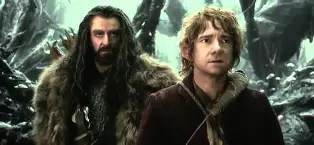
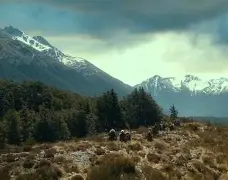
In contrast to the Lord of the Rings films, which relied heavily on large-scale miniatures or matte paintings, The Hobbit trilogy extensively employed digital environments due to the stereoscopic filming method. As Peter Jackson himself elucidated, this was primarily a result of the need for greater camera flexibility when shooting in stereo.
The Pursuit of Realism: Elevating Digital Elements to Miniature and Full-Scale Standards

To maintain visual coherence with their predecessors, the digital elements in The Hobbit trilogy were meticulously crafted to emulate the look and feel of miniatures or full-scale environments. This required significant advancements in modeling, texturing, geometry, and lighting techniques.
Matte Painting’s Evolution: Adapting to Stereoscopic Filming with 2.5D Techniques
In an effort to integrate matte paintings seamlessly with stereoscopic footage, a technique called 2.5D was developed, enabling the creation of three-dimensional environments while maintaining the flexibility and adaptability required for this innovative filming method.
The Distinctive Visuals: A Comparative Analysis of The Hobbit and Lord of the Rings
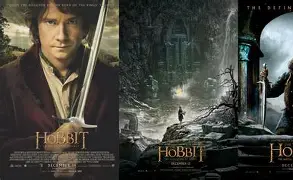
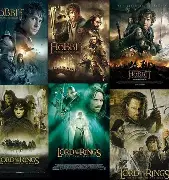
Exploring the disparities in visual aesthetics between the two trilogies, one can appreciate the unique approaches taken by Peter Jackson for each saga. While The Lord of the Rings was filmed on 24 frames per second using traditional film techniques, The Hobbit was shot at 48 frames and in 3D, resulting in striking differences in visual quality and texture.
The Legacy of Middle-earth: A Continuing Tale of Innovation and Adaptation
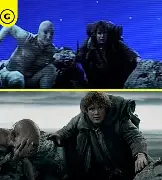
The Hobbit trilogy serves as a testament to the ever-evolving nature of filmmaking, showcasing how technological advancements and production requirements can reshape the landscape of Middle-earth. By embracing digital technologies, Peter Jackson paved the way for future adaptations of Tolkien’s epic tales, ensuring that the enchanting world of Middle-earth continues to captivate audiences worldwide.