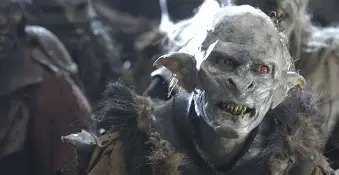
Why The Orcs In The Hobbit Look So Different From Lord Of The Rings
Why the Orcs in The Hobbit Look So Different from Lord of the Rings
In the grand tapestry of Middle-earth, a question often pondered by scholars and fans alike is: why do the orcs in The Hobbit appear so different from those in Lord of the Rings? To unravel this enigma, we must delve into the lore and production history of these iconic films.
A Brief Overview of Orc Origins
According to the published Silmarillion, orcs are corrupted elves, first created by Melkor (Morgoth), the Dark Lord. After Morgoth’s imprisonment, his orcs multiplied and served as the backbone of his armies during the War of Wrath and throughout the Second Age.
The Varieties of Orcs
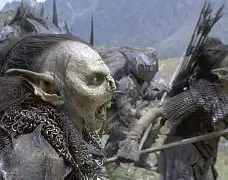
In Tolkien’s world, goblins are simply a term for orcs. However, over time, different types of orcs emerged in Middle-earth. These included the Uruk-hai and Moria orcs in Lord of the Rings, while The Hobbit features Goblins of the Misty Mountains and the Laketown Goblins.
The Evolution of Orcs in The Hobbit
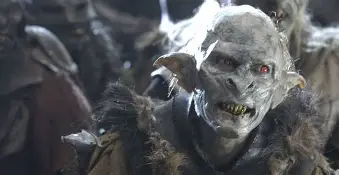
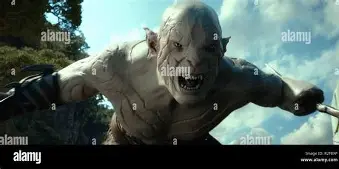
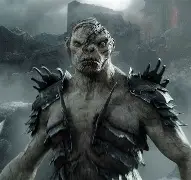
In Peter Jackson’s adaptation of The Hobbit, the orcs were portrayed as smaller and less intimidating than their counterparts in Lord of the Rings. This was a deliberate choice by the filmmakers to emphasize the difference between the two stories and make the orcs seem more like traditional goblins.
The Evolution of Orcs in Lord of the Rings
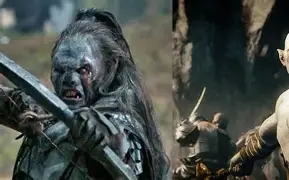
In contrast, the orcs in Lord of the Rings were larger and more aggressive. This was achieved by crossbreeding orcs with wargs (giant wolves) to create the fearsome Uruk-hai, as well as by refining the design over multiple films.
The Influence of Production History
It’s important to note that both The Hobbit and Lord of the Rings were filmed at different times, with distinct production teams. This allowed for a more gradual refinement of orc designs in Lord of the Rings, whereas The Hobbit was produced more quickly and had less time to develop its orcs’ visual identity.
The Role of Tolkien’s Vision
J.R.R. Tolkien himself had a complex vision for the origins, appearances, and behaviors of various races in Middle-earth. While his ideas evolved over time, it is clear that he intended for orcs to be corrupted elves and for goblins to simply be another term for orcs.
The Impact of the Films
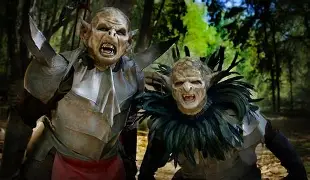
The films adaptations of The Hobbit and Lord of the Rings have had a profound impact on how audiences perceive these iconic works. While some differences between the films and the source material may be controversial, they serve to bring Middle-earth to life for millions around the world.
Conclusion
In conclusion, the different appearances of orcs in The Hobbit and Lord of the Rings are due to a combination of J.R.R. Tolkien’s evolving vision, the production history of the films, and creative choices made by the filmmakers. Understanding these factors allows us to appreciate both adaptations as unique interpretations of Middle-earth.
Further Reading
- The Silmarillion by J.R.R. Tolkien
- The History of Middle-earth series by J.R.R. Tolkien
- The Lord of the Rings: The Complete Visual Companion by J.D. Wakeman
- The Hobbit: A Cinematic Journey by Michael D. Ewins
Frequently Asked Questions
– Are orcs and goblins the same in Middle-earth?
– According to Tolkien’s published works, yes.