The Hobbit: Why Two Films Instead Of Three?
The Expansion of the Hobbit: From a Singular Narrative to a Cinematic Trilogy
The transition of J.R.R. Tolkien’s 1937 novel, a concise work of approximately 300-odd pages, into a three-film cinematic event represents one of the most contentious adaptations in the history of the Legendarium. While the original text was designed as a children’s story with a linear progression, the film series sought to align its scale with the preceding Lord of the Rings trilogy. This shift necessitated a massive expansion of the source material, moving beyond the novel to incorporate wider Middle-earth lore.
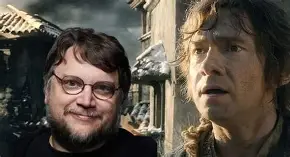
Initially, the project was not destined to be a trilogy. Guillermo del Toro, the original director attached to the project, maintained the academic position that any expansion beyond two films would result in a bloated narrative. However, following del Toro’s departure, Peter Jackson assumed directorial control and proposed a three-part structure to ensure the journey to Erebor felt sufficiently epic in scope.
This decision was not merely an artistic choice but was heavily influenced by the desire to integrate the appendices of The Lord of the Rings. By weaving in the history of the White Council and the investigation at Dol Guldur, the production team attempted to bridge the chronological gap between the two stories. This transformation fundamentally altered the pacing of the narrative, shifting it from a whimsical adventure to a high-stakes political drama.
THIS is why we go to the movies
Movie Genres Explained — Types of Films & the Art of Subverting Film Genres
Why movies went from 15 minutes to 2 hours
Why Hollywood is Falling Apart
The Conflict of Directorial Vision and Production Logistics
The shift from a two-film plan to a trilogy was compounded by significant organizational failures during the pre-production phase. Unlike the meticulous preparation that defined the Lord of the Rings films, the Hobbit production suffered from a lack of planning time after the transition from del Toro to Jackson. This resulted in a frantic filming process where the final story structure was not fully established before cameras began rolling.
According to production documentaries, the lack of a concrete blueprint meant that footage was often captured without a clear understanding of which film it would eventually inhabit. This is particularly evident in the climactic sequences of the Battle of the Five Armies, where the scale of the conflict was expanded far beyond the brief description provided in the novel. The result was a cinematic experience that prioritized spectacle over the tight narrative economy of the original book.
The Integration of Non-Canonical Elements
To fill the temporal void created by the three-film structure, the screenwriters introduced characters and subplots entirely absent from the 1937 text. The most prominent example is Tauriel, a Silvan Elf and captain of the Mirkwood guard. Her character was specifically developed to provide an emotional anchor and a romantic subplot, elements that were non-existent in Tolkien’s original narrative.
Tauriel’s role was further expanded as the decision to move to three films was finalized. While she was originally intended for a more concentrated role in the finale, her presence was distributed across the second and third films to maintain continuity. This addition highlights the tension between adhering to the source material and the demands of modern blockbuster cinema, which often requires expanded character arcs to sustain longer runtimes.
Comparative Analysis: Book vs. Film
From a scholarly perspective, the discrepancy between the book and the trilogy is staggering. The novel focuses on the internal growth of Bilbo Baggins and the singular goal of reclaiming the Lonely Mountain. In contrast, the films expand the scope to include the overarching threat of the Necromancer, effectively turning a heist story into a prequel for the War of the Ring.
The financial outcome of this expansion was significant, with the trilogy grossing over $2.9 billion worldwide. However, this commercial success came at the cost of the novel’s tonal intimacy. By inflating a 300-page book into nearly nine hours of cinema, the production shifted the focus from the “small” perspective of a Hobbit to the “grand” perspective of Middle-earth’s geopolitical conflicts.
FAQ
Why was the film series expanded to three movies instead of two?
The expansion was driven by Peter Jackson’s desire to match the epic scale of the Lord of the Rings trilogy and his decision to incorporate material from Tolkien’s appendices and wider notes, alongside production challenges and a lack of initial planning.
Does the character of Tauriel appear in the original book?
No, Tauriel is a fictional character created specifically for the films by Peter Jackson, Philippa Boyens, and Fran Walsh to expand the narrative and provide additional emotional depth.
How does the length of the novel compare to the films?
The original novel is a relatively short work of approximately 300-odd pages, whereas the film adaptation expands this narrative into three feature-length movies, significantly increasing the runtime and plot complexity.